
We spoke with Nikolas D’Andrade about the scope and challenges of the VFX on Cold Storage, from coordinating large international teams to bringing infected creatures and complex environments to life, and the memorable moments that shaped the production.
Can you give us your overall view of the VFX work on Cold Storage?
To convey the true scale of the VFX work on Cold Storage, it’s important to note that the 541 shots correspond to the final cut, but they don’t reflect the full workload. In the earlier stages, far more shots were handled during an extensive research and iteration phase aimed at optimizing the storytelling and pacing of the film. At that point, we were closer to 850/900 shots.
The work spanned nearly a year and a half. I was scouting in Morocco as early as March 2023, filming wrapped in June 2023, and the process continued through grading in October 2024. This timeline reflects both the film’s complexity and the constantly evolving edit.
Creatively, Cold Storage was a true challenge, covering the entire VFX spectrum: from basic rig cleanup to full environment destruction, creatures, digital set extensions, and the enhancement of practical SFX makeup. The only element we didn’t handle was digital stunt doubles. The distribution of work over time and across MPC teams was particularly complex. With the edit constantly evolving, VFX departments were tightly interconnected: creatures, environments, destruction, compositing… Each narrative change had cross-cutting impacts, requiring fine coordination and a high level of flexibility from the teams throughout production.

How did you coordinate with StudioCanal, production, and the directors?
It was a true team effort. Collaboration with StudioCanal was highly enjoyable, as they were consistently present, attentive, and supportive of our requests and recommendations, creating a climate of trust and efficiency. Our collaboration with director Jonny Campbell during filming was constructive, and I also worked closely with the post-production team. Throughout this phase, we incorporated creative feedback from Gavin Polone and David Koepp, ensuring strong artistic and narrative continuity through to the film’s completion.
With 431 people involved at MPC, how were teams organized?
Work was divided between MPC Paris, Liège and MPC Bangalore based on task types and site specialties. The organization followed a classic VFX production pyramid: at the top, the VFX Supervisor, then CG Supervisors, Animation Supervisor, and Compositing Supervisor. Each oversaw leads, who in turn managed teams of artists. This structure allowed for clear decision-making while ensuring smooth communication between departments and sites, despite the project’s complexity and long production timeline.
Were there specific challenges with creatures, environments, or organic effects like the Fungus?
For the creatures, one of the main challenges was designing and animating infected animals. Even animating normal animals—cats, deer, or cockroaches—is complex. Adding narrative-driven behavioral changes due to infection created an additional layer of difficulty. We had to strike a constant balance: suggesting that something was wrong without resorting to caricature or exaggerated behavior. I remember discussing with David when we realized the deer appeared “drunk” — such drift is easy to reach and very hard to correct without losing credibility. This required many iterations to remain subtle, so the audience senses something is off, while behavior stays plausible.
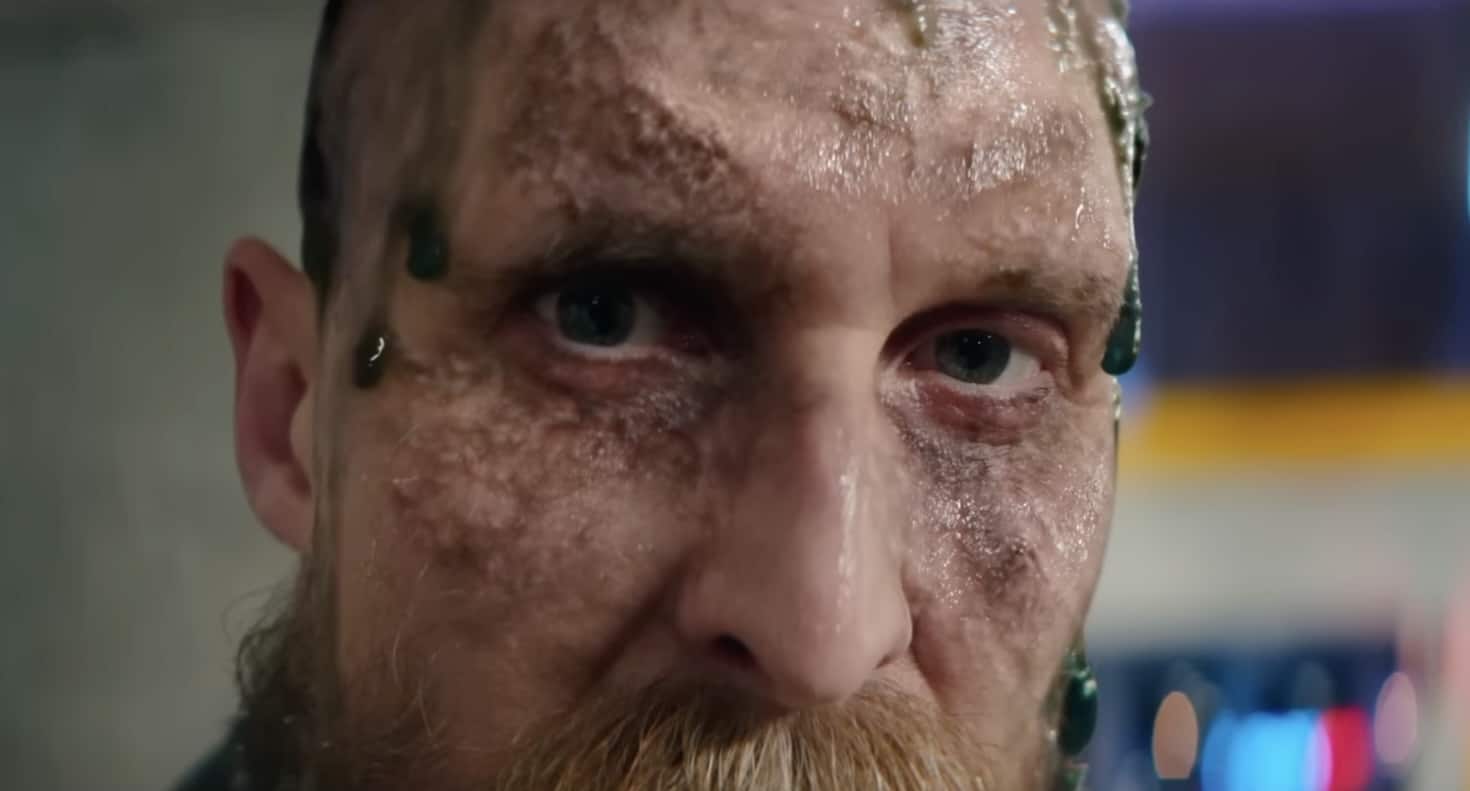
Another key aspect was preserving the FX makeup. The work and design by Dave and Lou Elsey were outstanding. Our goal was never to replace it, but to enhance it. We added subtle, organic subdermal movements in compositing, carefully developed to adapt to both actor movements and lighting variations in each shot. The challenge was to enrich the effect without ever compromising the tangible authenticity of the practical makeup. The final sequence was also a major challenge, particularly logistically. It was extremely demanding on computing power and storage. The complexity of simulations, density of elements, and data volume required rigorous management of machine resources and data flows to keep production on schedule.
From a supervision standpoint, what were the main challenges on a project of this scale?
Maintaining artistic continuity across the film was a constant challenge, as was keeping the teams motivated and engaged during a long, demanding production. Creating a clear, coherent, and stimulating work environment was essential to keep everyone aligned with the film’s vision from start to finish.
A memorable shot?
The shot where Dr. Martins (Sosie Bacon) collapses and her eye bursts is particularly striking. I also love the shot where Garbage (Lujza Richter) turns and the wall behind her is visible through her eye socket. Beyond these moments, there are many subtle passages I’m very proud of.

Final word?
Filming naturally generated many anecdotes, as did the production phase. One I enjoy recounting involves capturing practical elements for VFX. With the SFX team, notably SFX Supervisor Pasquale Catalano (James Bond: No Time to Die, Spiderman: Far From Home), we filmed numerous handheld elements while the camera was on standby.
The most memorable story: I asked production to buy nearly five kilos of offal from the butcher—normally discarded during meat prep—to load into an air cannon and literally blow up. The goal was to have real material to mix with digital effects, especially for the deer explosion. Result: it went everywhere in the studio… and I think Production Manager Maria Panicucci still holds a grudge!
I want to thank the teams, especially the Paris and Bangalore teams, for their patience, commitment, and resilience. Taking on a film of this scale was no small feat, and it’s tempting to get discouraged, yet they persevered and gave their best. Special thanks to Alice, Fanny, and Cyprien, who supported me throughout the journey.
A huge thank you to Dave and Lou Elsey and their team at Igor Studio for the inspiration and everything I learned from them. I also want to acknowledge the Italian production crew, with whom working was an incredible human and professional experience. Finally, cinematographer Tony Slater Ling, whose generosity and openness were invaluable throughout the project.


